Reviving a Flood‑Prone Village
Co‑creating a safer, more welcoming public space in a Slovenian mining settlement
Credit: Prostorož
Credit: Prostorož
Credit: Prostorož
Case Study
Context
A small mining village in a valley regularly hit by floods, with degraded public space.
Žerjav is a small settlement in northern Slovenia, tucked away in the Koroška region. Around 340 people live there. Mining shaped the valley for centuries. More recently, floods have become the bigger problem, and they keep getting worse.
The central public space has suffered as a result. The main road goes right through the village, so cars drive fast past people's homes. Children cannot play safely. Pedestrians have to be careful. The soil is contaminated with lead, a leftover from the mining days. Floods regularly damage homes and infrastructure. People feel cut off from each other and from the place they live.
The floods of August 2023 started to shift mentalities. The village needed protection from the water, clearly. But that was not enough. People also needed a reason to stay. They wanted children to play without fear of traffic. They wanted neighbours to meet. They wanted the village to feel like a village again.
Story
From emergency response to a long-term vision for a village public space.
The project was led by Prostorož, a spatial design studio, in partnership with the Municipality of Črna na Koroškem. It did not start from scratch. The previous year, the EmMa (Emergency Makeover) project had already begun exploring how public space could help the village recover, laying great foundations.
The Protect+Play project had two parallel tracks, each with its own logic.
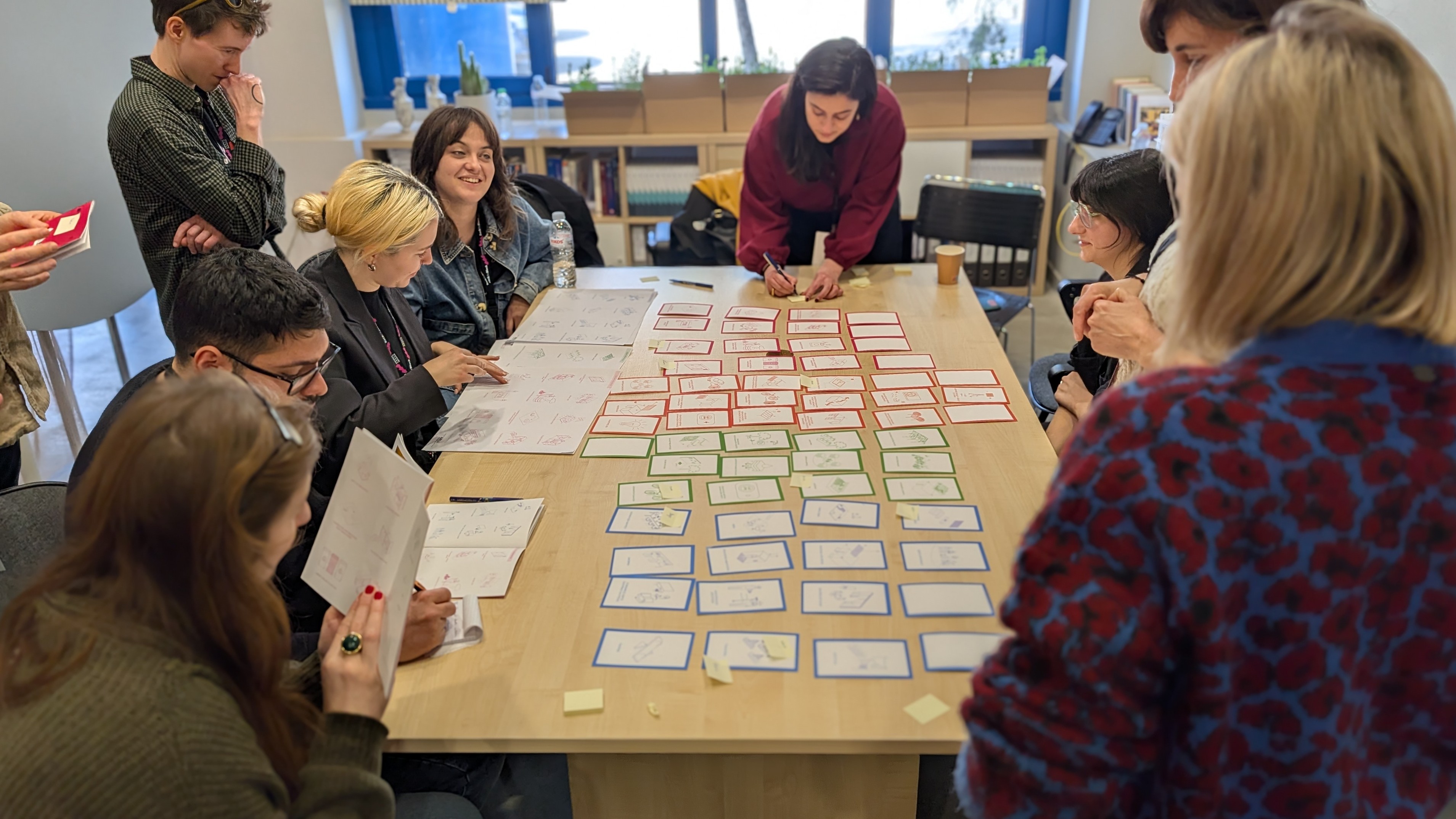
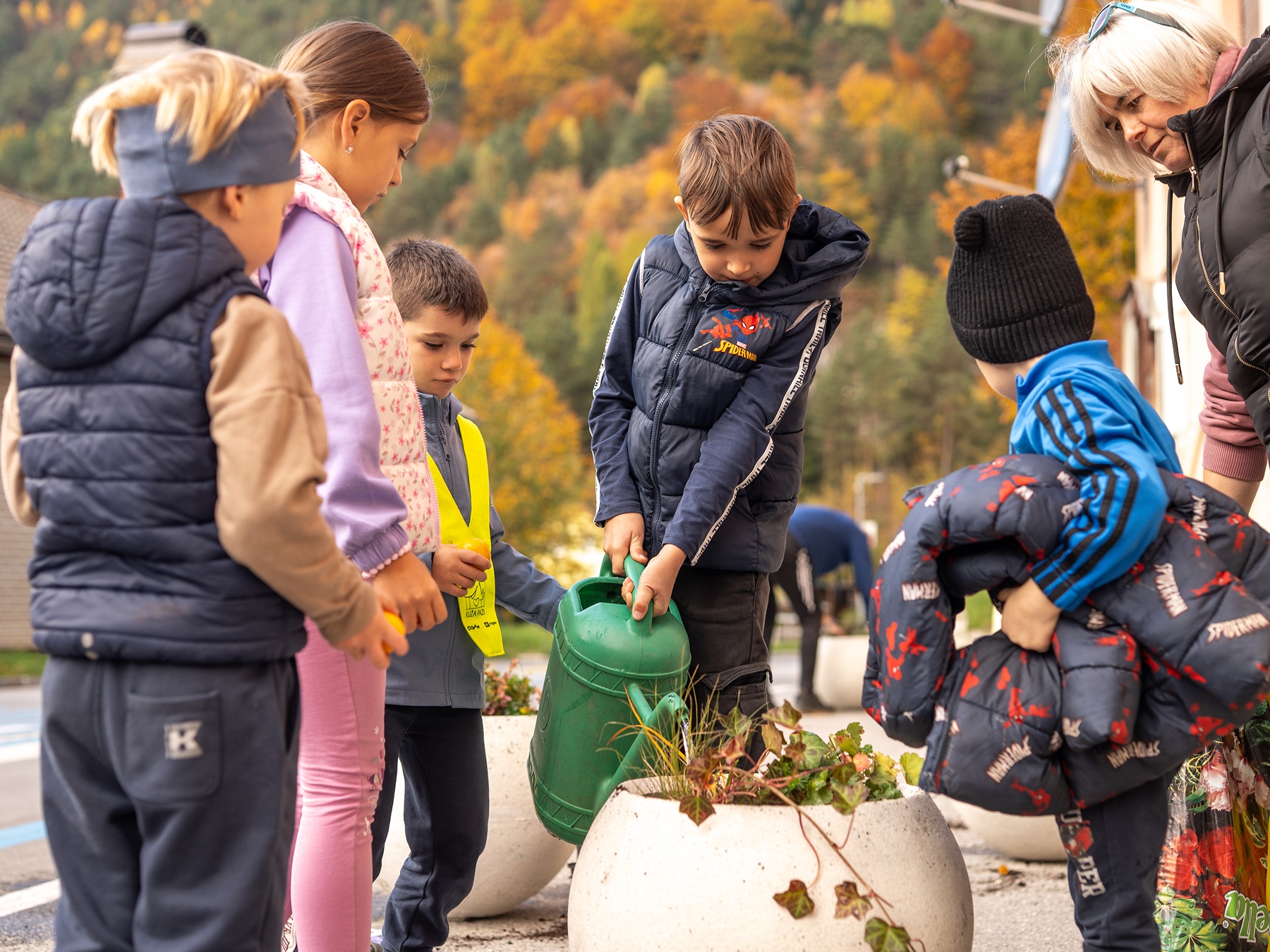
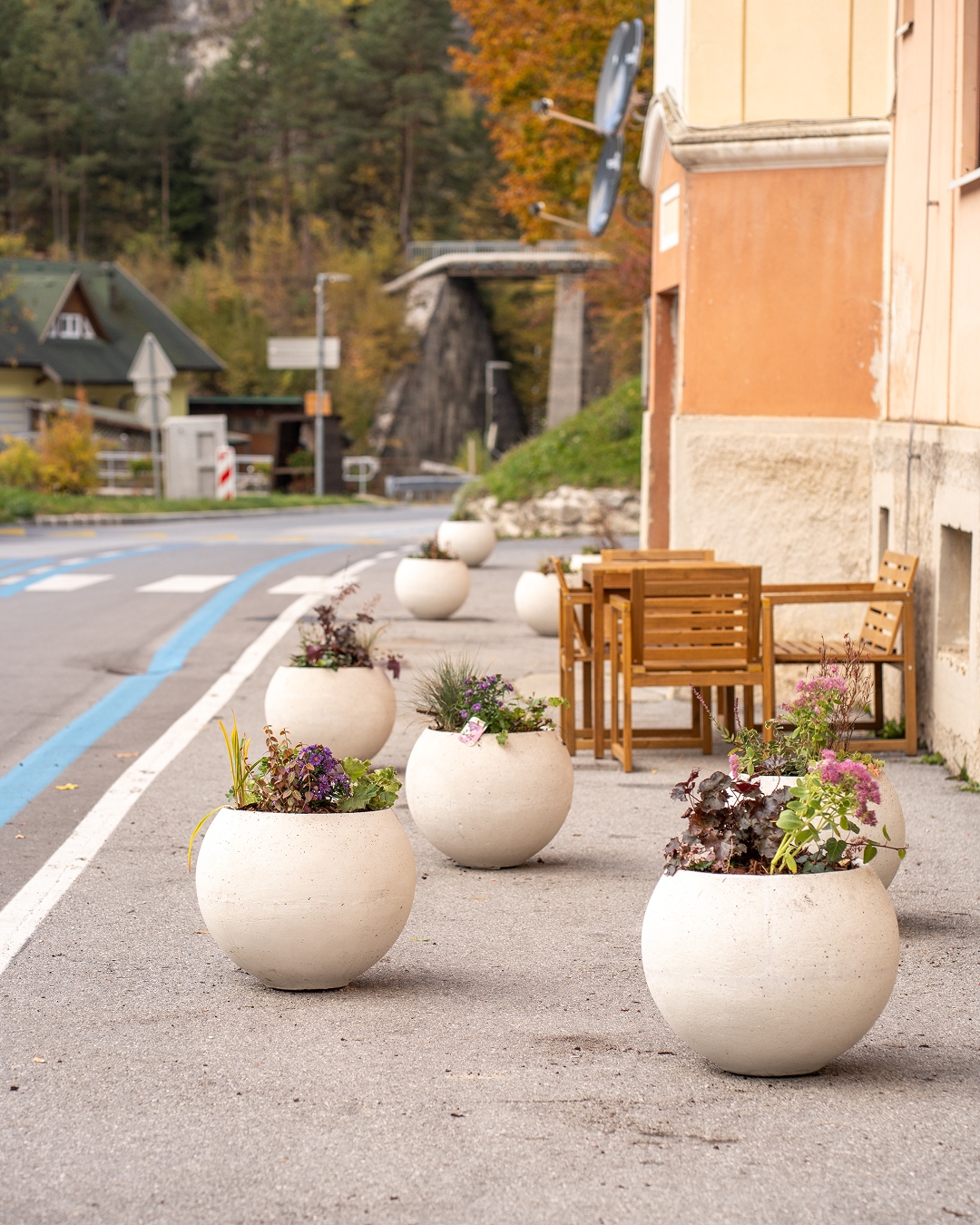
The first was immediate and visible: A tactical urbanism intervention built together with local residents, children from the school and kindergarten, and civic organisations. Together, they designed a floor mural shaped like a trumpet. The trumpet was not a random choice: it honoured a renowned orchestra conductor born in the area. But it was also a practical one. Painted directly on the road surface, the mural creates a visual disruption that catches drivers' attention and encourages them to slow down. Benches, tables and flower planters were then added.
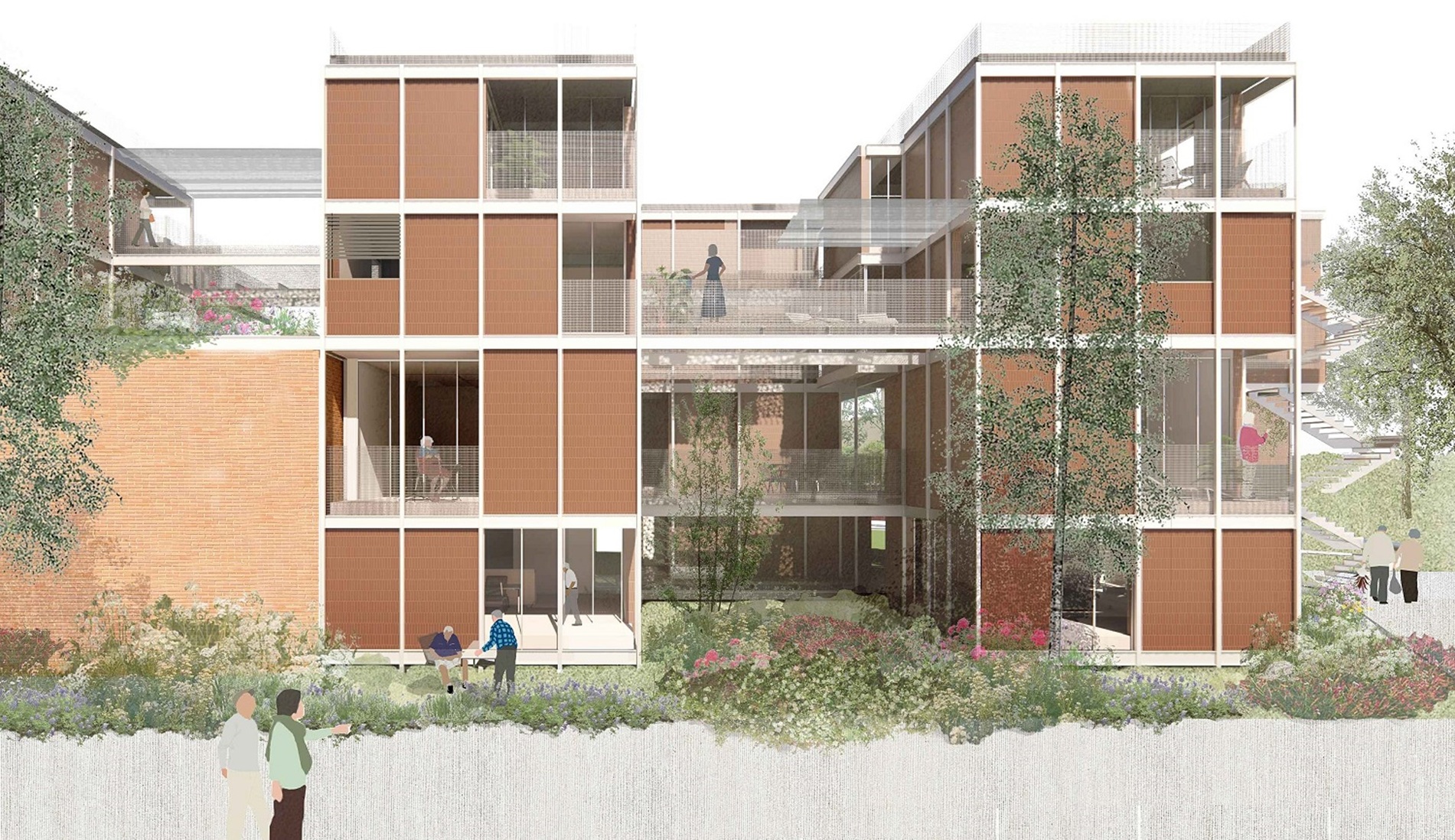
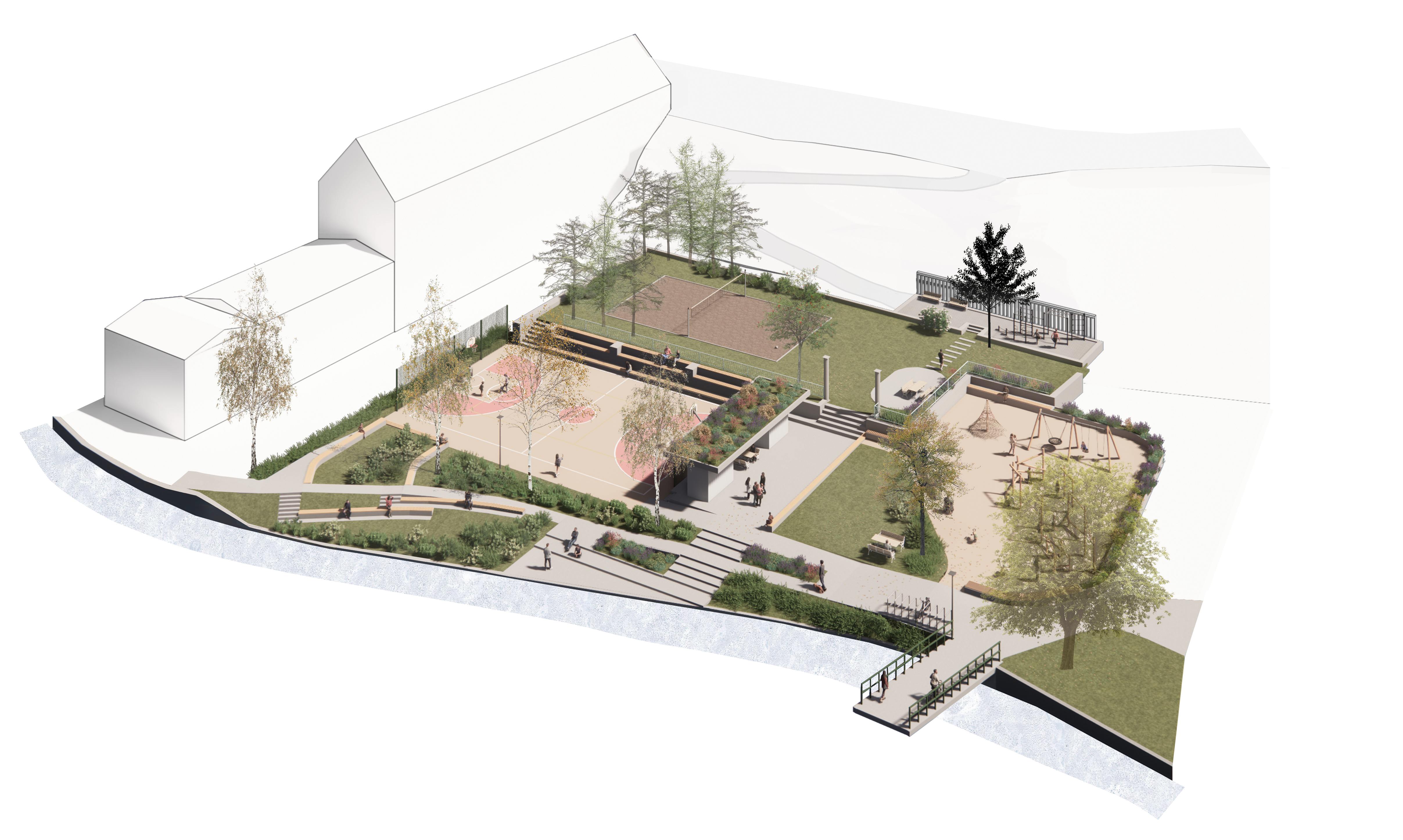
The second track was slower and more technical. A long-term plan for the public space, developed with hydrologists, geologists, landscape architects, traffic engineers and construction specialists. This plan integrated flood retention, nature-based solutions, pedestrian and cycling routes, and spaces for social and cultural activities. It was coordinated with the municipality, the Water Agency of the Republic of Slovenia and the Regional Development Agency. This work required multiple rounds of consultation and design adjustments, but it resulted in a plan that is both technically sound and rooted in what the community actually wanted.
Lesson learnt
What made the difference: early groundwork, proper procedures, and a local ambassador.
The project was first successful because of the early groundwork. Work started before the project formally began, through the EmMa initiative. That time allowed the team to build trust, understand local needs, and establish relationships with residents. Without that foundation, the project would have moved much more slowly, and probably not towards the same results.
Clear communication and a local ambassador also made a real difference. One resident acted as a relay, helping to inform others and bring people into the process. In a small community like this, personal connections matter way more than posters or social media.
Following proper procedures turned out to be important for long-term impact. The team discovered that the site lacked proper land-use designation and an occupancy permit. While it would have been quicker to overlook this, the decision to follow the correct process took more time but created a legally secure foundation for future investment.
The project also showed that tactical urbanism can work in small towns. The floor mural, benches and tables created an immediate change that residents could see and use. It gave people confidence that change was possible. This made it easier to then discuss the longer-term plan.
Impact
The project delivered a tangible improvement to the central public space. The floor mural, benches, tables and planters transformed a degraded, traffic‑dominated area into a place where residents actually gather. Children now feel safer walking near the road and residents report that the benches are frequently used and that cars no longer park in front of their homes.
The project also produced a detailed long‑term plan for a flood‑resilient, multifunctional public space, ready for future investment. It integrates water management, nature‑based solutions, pedestrian and cycling routes, and community spaces. The plan has been validated by experts to ensure relevance. For the municipality, having a legally secure and technically sound design means they can now apply for more funding.
Quality of life in the village improved in concrete ways. Residents now have a place to sit and talk. Children have a safer route to school. The village has a visible centre again. All of these may seem like small changes, but in a place with 340 people, they matter a lot.
Two seminars then followed, one national and one regional, to share the Žerjav case study with other municipalities. Over 40 participants attended, including representatives from 12 municipalities in the region. The seminars generated interest in replicating the approach in other small towns.
The project also left a lasting mark on how the municipality works. On top of the new legal foundation, the municipality has gained experience in running a participatory planning process and coordinating with diverse experts: which should be useful in any other project.
The project was supported by the EIT Community New European Bauhaus – Enhance NEB programme.